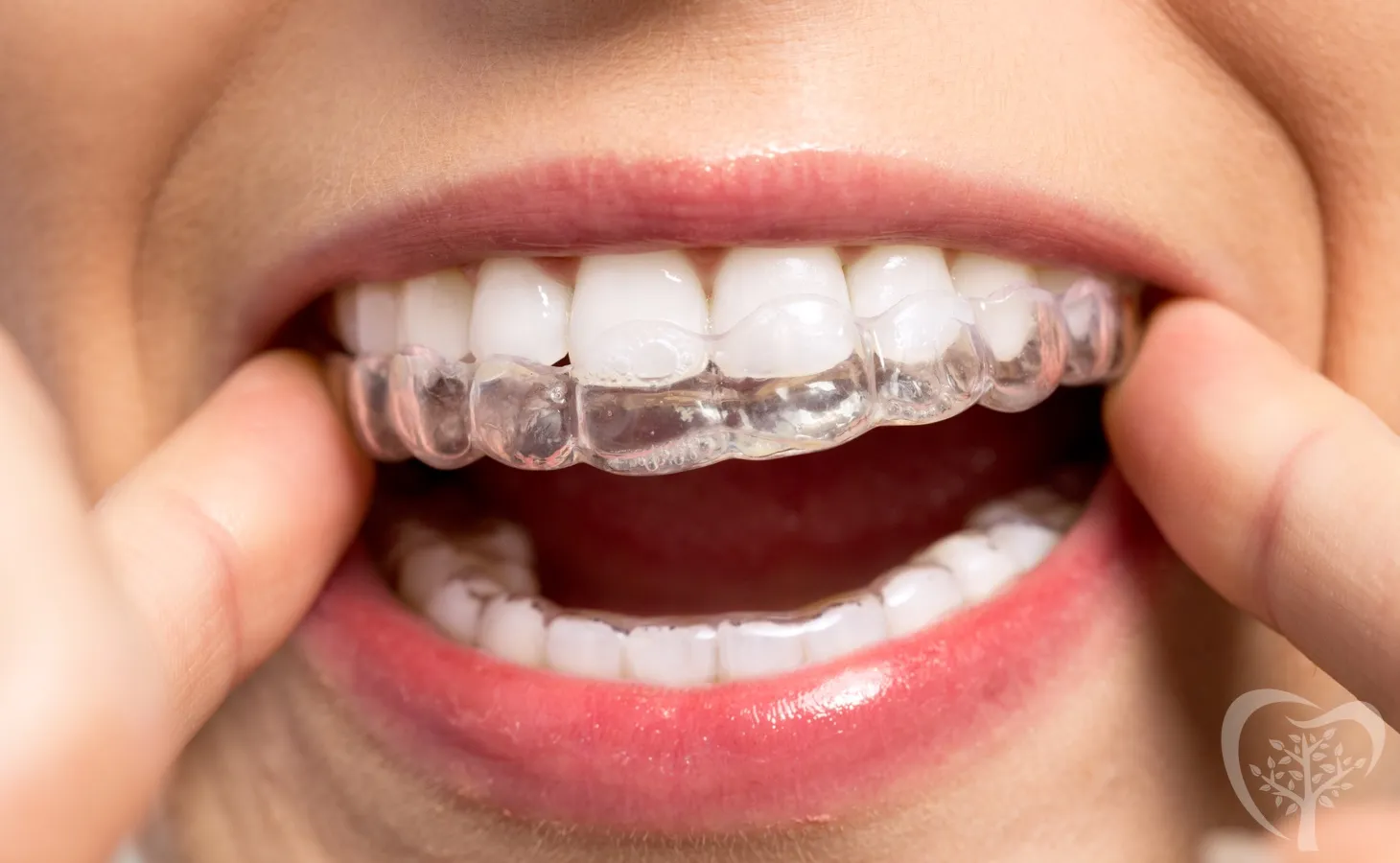
What are Dentist-Provided Teeth Whitening Trays
Dentist-provided teeth whitening trays are custom-fitted, clear plastic molds designed to hold a bleaching agent against your teeth. Unlike over-the-counter options, these trays are created specifically for your mouth, ensuring a snug fit that minimizes the leakage of the whitening solution onto your gums and maximizes the contact with your teeth surfaces. This personalized approach often results in more effective and consistent whitening, as the trays are designed to deliver the bleaching agent evenly across your teeth. These trays are part of a professional teeth whitening treatment that dentists provide to whiten teeth and improve their appearance, usually offering more potent bleaching agents than those found in store-bought products.
The Science Behind Teeth Whitening Trays
The science behind teeth whitening trays revolves around the chemical reaction between the bleaching agent, typically hydrogen peroxide or carbamide peroxide, and the stains on your teeth. These agents penetrate the enamel and dentin, breaking down the stain molecules into smaller, less visible components. The trays help to keep the whitening agent in close and constant contact with the teeth, which enhances the bleaching process. The custom fit of the trays prevents the saliva from diluting the bleaching agent. Additionally, the dentist can control the concentration of the bleaching agent, which can result in a more significant and noticeable change in the teeth’s shade. The effectiveness depends on the concentration of the agent and the duration of the treatment.
How Teeth Whitening Trays Work

The process typically starts with a consultation with your dentist, who will assess your oral health and determine if teeth whitening is suitable for you. If approved, the dentist will take impressions of your teeth to create custom trays. Once the trays are ready, you’ll be given instructions on how to apply the whitening gel to the trays and how long to wear them each day. You’ll then place the trays over your teeth, ensuring that the whitening solution covers the surface of your teeth. The trays are usually worn for a specific period, which can range from a few minutes to several hours per day. The dentist often monitors the progress and may adjust the treatment plan. This process is repeated consistently over several weeks to achieve the desired level of whiteness. Follow-up appointments may be scheduled to assess progress and ensure your oral health is maintained throughout the treatment.
How Long Do Teeth Whitening Trays Take to Work
The time it takes to see results from teeth whitening trays varies depending on several factors, including the concentration of the bleaching agent, the severity of the stains, and how consistently you use the trays. Generally, you can start to see noticeable results within one to two weeks of consistent use. However, the full effect of the treatment may not be visible for several weeks. Some people may see significant improvements in as little as a week, while others may need a month or more. Following your dentist’s instructions is critical to optimize the treatment time and achieve the best results. The dentist will monitor your progress and adjust your treatment plan as needed. Patience and consistency are vital in teeth whitening with trays, as results are gradual but often substantial.
Fact 1 Effectiveness of Dentist-Provided Trays
Dentist-provided teeth whitening trays are generally more effective than over-the-counter products. This is primarily due to the higher concentrations of bleaching agents used in professional treatments. Dentists can use solutions containing up to 35% hydrogen peroxide, while the concentrations available in over-the-counter products are much lower. The custom-fitted trays also ensure that the whitening agent is in direct contact with the teeth, maximizing the bleaching effect. Clinical studies and patient experiences consistently show that dentist-provided trays can significantly improve the shade of teeth, often resulting in a smile that is several shades whiter. The effectiveness is also improved by the professional supervision of the dentist. The dentist can monitor the patient’s progress and address any issues that might arise, which contributes to more successful outcomes.
Fact 2 Cost-Effectiveness of Teeth Whitening Trays

While the initial cost of dentist-provided teeth whitening trays can be higher than over-the-counter options, they can be cost-effective in the long run. The custom-fit trays are reusable, and you only need to purchase whitening gel refills as needed. The professional supervision and higher concentrations of bleaching agents often lead to more significant and longer-lasting results. The investment in professional teeth whitening may reduce the need for frequent touch-ups or repeated treatments. When considering cost-effectiveness, it is important to consider the value of the results achieved. A brighter, whiter smile can boost confidence and self-esteem, contributing to a better overall quality of life. The cost-effectiveness depends on the patient’s commitment to proper oral hygiene and maintenance practices.
Fact 3 Safety and Side Effects
Teeth whitening trays from the dentist are generally safe when used under professional supervision. Dentists are trained to assess your oral health and determine if teeth whitening is appropriate for you. They also ensure that the treatment is administered safely, minimizing the risk of complications. However, like any dental procedure, teeth whitening can have side effects. Some people may experience temporary tooth sensitivity or gum irritation. Your dentist is equipped to deal with any of these issues. They can provide advice on how to manage sensitivity. Following the dentist’s instructions and adhering to the recommended usage of the trays helps to reduce the risk of side effects and ensures a positive experience. If you have any concerns, discuss them with your dentist.
Potential Side Effects of Teeth Whitening
The most common side effects of teeth whitening are tooth sensitivity and gum irritation. Sensitivity can occur because the bleaching agents can penetrate the enamel and irritate the nerves in the teeth. This usually subsides shortly after the treatment is finished. Gum irritation can result from the bleaching agent coming into contact with the soft tissues of the mouth. These side effects are typically mild and temporary. Dentists often recommend using a desensitizing toothpaste to manage sensitivity. To reduce gum irritation, it’s essential to ensure that the trays fit snugly and that the bleaching agent does not leak out. If side effects persist or worsen, you should contact your dentist. Severe side effects are rare, but proper guidance and care will reduce the likelihood.
Fact 4 Types of Whitening Agents Used

The most common whitening agents used in dentist-provided teeth whitening trays are hydrogen peroxide and carbamide peroxide. Hydrogen peroxide is a strong oxidizing agent that breaks down stain molecules in your teeth, making them appear whiter. Carbamide peroxide is a milder form of hydrogen peroxide that gradually breaks down into hydrogen peroxide, offering a sustained whitening effect. Dentists may use different concentrations of these agents, depending on the patient’s needs and the severity of the stains. The strength of the bleaching agent can be adjusted. In-office whitening treatments usually involve higher concentrations for faster results, while trays used at home typically use lower concentrations. Your dentist will determine which is the best option for you. Other ingredients may be added to reduce sensitivity or enhance the whitening effect. The choice of agent depends on the patient’s preferences, needs, and dentist recommendations.
Fact 5 Results and Longevity of Whitening
The results of teeth whitening trays are often impressive, providing a noticeable improvement in the brightness of your smile. The longevity of the results can vary depending on several factors, including your lifestyle and oral hygiene habits. The effects of teeth whitening can last from several months to a few years. Consuming staining foods and beverages, such as coffee, tea, red wine, and berries, can reduce the longevity of the whitening. Proper oral hygiene, including regular brushing, flossing, and dental check-ups, is crucial to maintaining your whitened smile. Many dentists recommend using a whitening toothpaste to help maintain the results. Touch-up treatments may be needed periodically to keep your teeth looking their best. Regular professional cleanings can also help remove surface stains and maintain the brightness of your smile. Taking care of your teeth ensures that your investment in teeth whitening lasts longer.
Maintaining Your Whitened Smile
Maintaining your whitened smile involves several practices to ensure your teeth remain bright and free from new stains. First, maintain good oral hygiene. Brush your teeth at least twice a day and floss daily to remove plaque and food particles that can stain your teeth. Regular dental check-ups and professional cleanings are essential for removing stubborn stains and plaque. Avoid or minimize the consumption of staining foods and beverages, such as coffee, tea, red wine, and dark-colored berries. If you consume these items, brush your teeth or rinse your mouth with water afterward to reduce staining. Use a whitening toothpaste to help remove surface stains and maintain the brightness of your teeth. Consider occasional touch-up treatments with your whitening trays as recommended by your dentist to prolong the results. By adopting these habits, you can enjoy a dazzling smile for a long time.